Phone: (+33) 625 16 20 71 - Sunday to Friday
contact@alliancemedicalfrance.fr
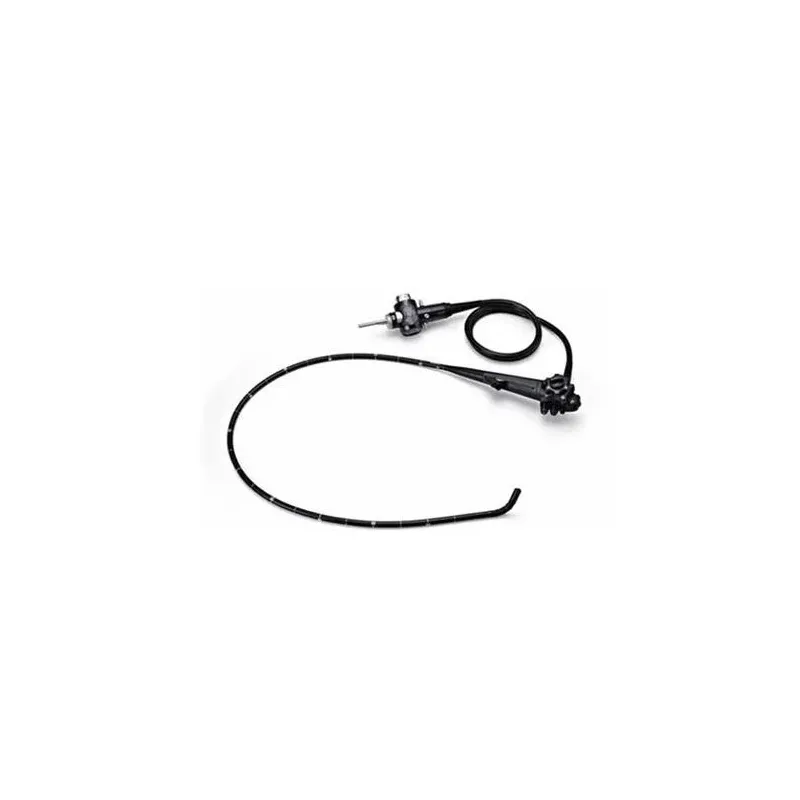
Olympus TJF-Q180V video duodenoscope with a 4.2 mm working channel and 1240 mm working length, designed for ERCP and therapeutic pancreatobiliary procedures.
The Olympus TJF-Q180V is a therapeutic video duodenoscope designed for endoscopic procedures involving the biliary and pancreatic ducts, particularly ERCP procedures. It combines advanced imaging, ergonomic design, and a 4.2 mm working channel to meet the requirements of diagnostic and interventional procedures.
The TJF-Q180V features a high-resolution CCD imaging system that provides detailed visualization of anatomical structures. NBI (Narrow Band Imaging) technology enhances the contrast of vascular and mucosal structures, facilitating detailed examination of areas requiring closer assessment.
Its 4.2 mm working channel allows the use of a wide range of compatible therapeutic instruments. With a 1240 mm working length, the TJF-Q180V is designed for procedures requiring access to the biliary and pancreatic ducts.
The V-Groove system is designed to facilitate the exchange of devices used during ERCP procedures while maintaining the guidewire in position. This design helps simplify device handling during interventions.
The TJF-Q180V provides four-directional angulation: 120° upward, 90° downward, 110° rightward, and 90° leftward. This range allows precise positioning of the duodenoscope during examination and therapeutic procedures.
An integrated memory chip stores certain endoscope-related information and allows the data to be displayed on the monitor. This identification function facilitates equipment tracking and management within the medical environment.
The TJF-Q180V is compatible with Olympus imaging systems including the CV-160 and CV-140. Use with the CV-180 provides access to the available functions for this configuration.
The Olympus TJF-Q180V combines advanced imaging, a 4.2 mm working channel, extensive angulation, and features designed for interventional procedures. It is suitable for gastroenterology professionals performing endoscopic examinations and interventions of the biliary and pancreatic ducts.
The Olympus TJF-Q180V is a therapeutic video duodenoscope designed for endoscopic procedures involving the biliary and pancreatic ducts, particularly ERCP procedures. It combines advanced imaging, ergonomic design, and a 4.2 mm working channel to meet the requirements of diagnostic and interventional procedures.
The TJF-Q180V features a high-resolution CCD imaging system that provides detailed visualization of anatomical structures. NBI (Narrow Band Imaging) technology enhances the contrast of vascular and mucosal structures, facilitating detailed examination of areas requiring closer assessment.
Its 4.2 mm working channel allows the use of a wide range of compatible therapeutic instruments. With a 1240 mm working length, the TJF-Q180V is designed for procedures requiring access to the biliary and pancreatic ducts.
The V-Groove system is designed to facilitate the exchange of devices used during ERCP procedures while maintaining the guidewire in position. This design helps simplify device handling during interventions.
The TJF-Q180V provides four-directional angulation: 120° upward, 90° downward, 110° rightward, and 90° leftward. This range allows precise positioning of the duodenoscope during examination and therapeutic procedures.
An integrated memory chip stores certain endoscope-related information and allows the data to be displayed on the monitor. This identification function facilitates equipment tracking and management within the medical environment.
The TJF-Q180V is compatible with Olympus imaging systems including the CV-160 and CV-140. Use with the CV-180 provides access to the available functions for this configuration.
The Olympus TJF-Q180V combines advanced imaging, a 4.2 mm working channel, extensive angulation, and features designed for interventional procedures. It is suitable for gastroenterology professionals performing endoscopic examinations and interventions of the biliary and pancreatic ducts.
 Francais