Phone: (+33) 625 16 20 71 - Sunday to Friday
contact@alliancemedicalfrance.fr
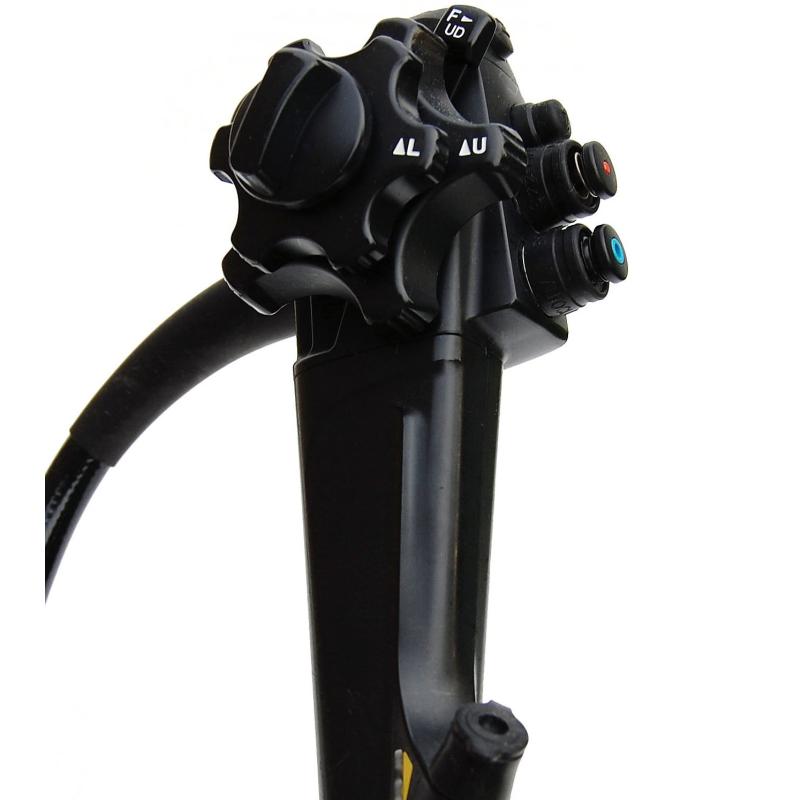
Olympus GIF-1TQ160 gastrointestinal videoscope with 140° field of view, 3.7 mm channel, 1030 mm working length and forward water jet for detailed upper GI examinations.
The OLYMPUS GIF-1TQ160 is a video gastroscope designed to provide precise visualization of the upper gastrointestinal tract while offering excellent maneuverability. As part of the EVIS EXERA series, it combines image quality, versatility, and ergonomic handling to meet the requirements of gastrointestinal examinations.
Its 140° field of view and forward-viewing direction provide broad visualization of anatomical structures. The 3–100 mm depth of field ensures clear visualization of the examined areas and facilitates the identification of abnormalities.
The high-resolution imaging system accurately reproduces colors and tissue textures, supporting detailed observation during procedures. Its 4 mm minimum visible distance also enables close-up observation of areas of interest.
With an 11.3 mm insertion tube diameter and a 10.9 mm distal tip diameter, the GIF-1TQ160 combines a relatively compact design with robust construction. Its angulation system provides a wide range of movement:
This range of motion facilitates access to different areas of the upper gastrointestinal tract while allowing precise control of the endoscope.
The 3.7 mm working channel allows the introduction of a wide range of endotherapeutic instruments. The positioning of accessories within the field of view facilitates coordination between instrument manipulation and real-time observation.
The system also incorporates an auxiliary channel and irrigation function to remove secretions and residues that could interfere with visualization during the examination.
Compatible with the Olympus EVIS EXERA platform, the GIF-1TQ160 can be integrated into compatible endoscopy configurations. Its ergonomic design promotes intuitive handling and precise control during examinations.
The OLYMPUS GIF-1TQ160 combines image quality, maneuverability, a 3.7 mm working channel, and irrigation capabilities to meet the requirements of diagnostic and interventional gastrointestinal procedures.
The OLYMPUS GIF-1TQ160 is a video gastroscope designed to provide precise visualization of the upper gastrointestinal tract while offering excellent maneuverability. As part of the EVIS EXERA series, it combines image quality, versatility, and ergonomic handling to meet the requirements of gastrointestinal examinations.
Its 140° field of view and forward-viewing direction provide broad visualization of anatomical structures. The 3–100 mm depth of field ensures clear visualization of the examined areas and facilitates the identification of abnormalities.
The high-resolution imaging system accurately reproduces colors and tissue textures, supporting detailed observation during procedures. Its 4 mm minimum visible distance also enables close-up observation of areas of interest.
With an 11.3 mm insertion tube diameter and a 10.9 mm distal tip diameter, the GIF-1TQ160 combines a relatively compact design with robust construction. Its angulation system provides a wide range of movement:
This range of motion facilitates access to different areas of the upper gastrointestinal tract while allowing precise control of the endoscope.
The 3.7 mm working channel allows the introduction of a wide range of endotherapeutic instruments. The positioning of accessories within the field of view facilitates coordination between instrument manipulation and real-time observation.
The system also incorporates an auxiliary channel and irrigation function to remove secretions and residues that could interfere with visualization during the examination.
Compatible with the Olympus EVIS EXERA platform, the GIF-1TQ160 can be integrated into compatible endoscopy configurations. Its ergonomic design promotes intuitive handling and precise control during examinations.
The OLYMPUS GIF-1TQ160 combines image quality, maneuverability, a 3.7 mm working channel, and irrigation capabilities to meet the requirements of diagnostic and interventional gastrointestinal procedures.
 Francais